By KIKI SIDERIS Associated Press
U.S. tap water is generally safe and high quality. But that doesn’t mean every glass tastes the same, or that every building’s plumbing delivers identical water to the faucet.
That uncertainty has fueled a booming market for water filters, from simple pitcher models to multi-thousand-dollar reverse osmosis systems. Yet experts say most American households don’t need extensive treatment. The challenge is knowing how to decide whether you need a filter.
Under the Safe Drinking Water Act, the Environmental Protection Agency sets health standards for more than 90 contaminants in public water systems, including chemicals and microbes. Utilities treat water with disinfectants like chlorine to kill harmful germs before it reaches homes. Most public utilities meet those standards and most Americans can safely drink from the tap.
“Unless you’re experiencing health impacts, you’ve got a notice from your water system or there’s a credible media story saying your water is unsafe, you shouldn’t feel the need to get a filter,” said Gregory Pierce, director of the University of California Los Angeles’ Human Right to Water Solutions Lab. “You’re still welcome to because it might make your water taste a little bit better, but it shouldn’t be considered necessary to have a water filter in 90-plus percent of the United States.”
Here’s how to check your local water quality, when water testing makes sense and how to choose a filter that addresses your concerns without wasting money.
How to check your water quality
Start with your utility’s annual Consumer Confidence Report, which details detected contaminants and whether the system meets federal standards. These reports are typically available on a city or utility website. You can also contact your provider directly with questions. Water systems are generally only responsible for the water until it reaches private property, meaning water quality can vary by building.
For many, those reports may be enough reassurance. Still, some consumers want more certainty, especially in older buildings.
“You should probably test your water to identify if you have a risk that you need to treat,” said Jess Goddard, chief science officer at the environmental testing company SimpleLab.
Private wells have different maintenance and safety needs because they are not regulated under the Safe Drinking Water Act and monitoring them is the responsibility of the homeowners. The EPA is among the agencies offering resources for people with private wells.
Testing kits can cost a couple hundred dollars or more, depending on what contaminants they screen.
Here’s how testing typically works: You order a kit, collect a water sample following the instructions and mail it to a certified lab. The lab analyzes it for specific contaminants, including a group of chemicals known as PFAS, microplastics, metals and disinfection byproducts, and provides a report.
If testing reveals a serious issue, Pierce recommends contacting your water utility or state environmental agency for guidance. If testing reveals high levels of contaminants, the solution may go beyond installing a household filter. Officials may recommend temporary alternative water sources, like bottled water, or infrastructure upgrades, like pipe replacement.
If there’s not a problem serious enough to require those measures, a filter may help.
Choosing a filter
People should consider what their filtration goals are and what different filters can do. The EPA advises that many household activities like flushing toilets and washing clothes don’t require treatment, so cooking and drinking are typical uses to consider.
Most filters carry ratings by the nonprofit organizations NSF and American National Standards Institute. Common NSF/ANSI ratings include 42 for taste or smell concerns, 53 for health effects and 401 for emerging compounds. An NSF database allows people to search by product name or what compound they want to reduce.
“Not every filter is good for everything,” said Sydney Evans, a science analyst who led a water filter testing project at the Environmental Working Group. “And even if there’s a filter out there that does absolutely everything, maybe you don’t need it.”
Many households use filters not because of safety concerns, but because of taste or odor, “which really do impact people’s enjoyment or sense of confidence in their drinking water,” Goddard said.
In those cases, a basic carbon filter, like many common pitcher models, can be effective. Activated carbon reduces chlorine and byproducts that form when chlorine reacts with natural organic matter in the water.
Those byproducts are expected in treated water, said Samantha Bear, a senior research analyst at SimpleLab. Even when levels are below federal limits, she said she and her colleagues filter their tap water — not because the water is unsafe, but to reduce long-term exposure.
Even people who live outside of areas with high levels of PFAS contamination may be concerned about their presence. PFAS is an abbreviation for perfluoroalkyl and polyfluoroalkyl substances. The Environmental Protection Agency says that filters can reduce PFAS levels, but urges people to contact their local water service provider as an initial step if they have concerns.
Lead is another contaminant that can often be beyond the capabilities of filtration systems. But the EPA notes that no level of lead is safe, so people may want to use filters even where alternative water sources or pipe replacements aren’t recommended.
How treatment systems differ
Pitchers, refrigerator filters and faucet-mounted systems treat water at the point of use — where you drink or cook with it. Under-sink systems and reverse osmosis units also treat water at the tap but may require professional installation.
Whole-home systems treat water at the point of entry, meaning water is filtered before it’s distributed throughout the house. These systems are typically more expensive and often require professional installation. They’re generally used for issues that affect all household water — like hardness, high iron levels or certain volatile compounds — rather than contaminants that originate in plumbing.
Beyond filtration systems, some homes use water softeners to reduce the presence of minerals that can build up and damage plumbing, though these systems don’t remove most other contaminants. Less common in homes are distillation systems, which boil water and condense the steam to remove minerals and some contaminants.
Most households don’t need whole-home or distillation systems unless they’re dealing with a specific, documented issue, experts said.
Maintaining and changing your water filter matters, too, because the cartridges can lose effectiveness or allow bacteria to build up if they aren’t changed according to the manufacturer’s instructions.
“Otherwise they may do more harm than good,” said Pierce, the UCLA scholar.
___
The Associated Press’ climate and environmental coverage receives financial support from multiple private foundations. AP is solely responsible for all content. Find AP’s standards for working with philanthropies, a list of supporters and funded coverage areas at AP.org.
News
Do you really need a water filter? Here’s what experts say
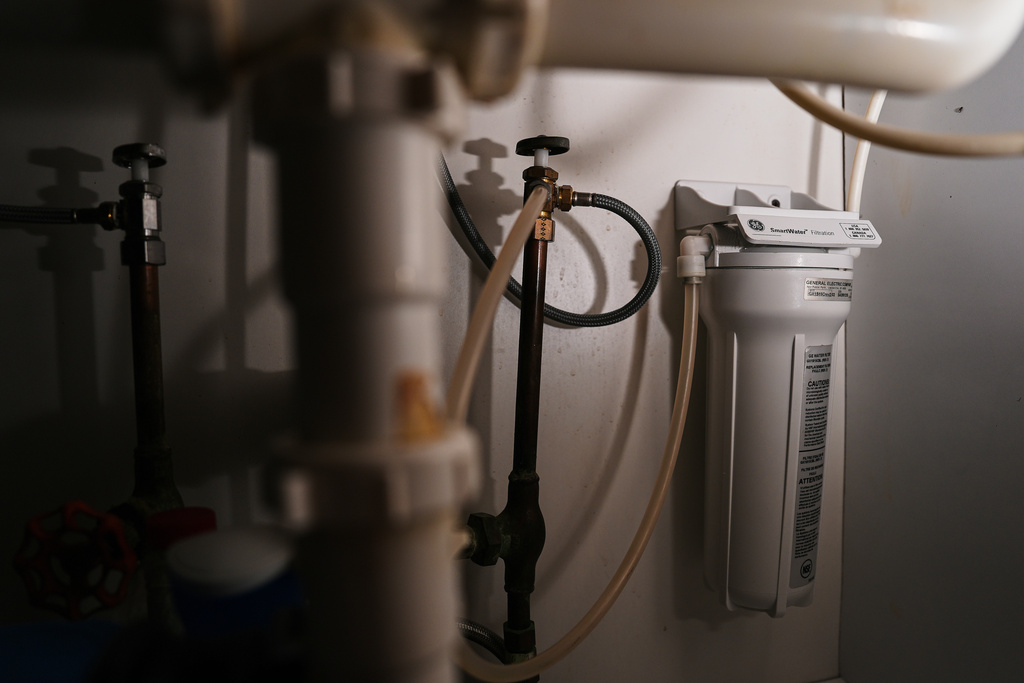
An under sink water filter operates Monday, March 9, 2026, in Cincinnati. (AP Photo/Joshua A. Bickel) Photo: Associated Press